
This time of year brings seville oranges To the markets of Paris. Over the past few years I’ve been wondering why they’re so hard to find, as it’s probably my favorite of all the jams and jellies to make and eat. But lately, they’re everywhere. I find myself busy making a lot of jam, which is easier because I’ve come up with a brand new, revolutionary technique that I can’t wait to share.
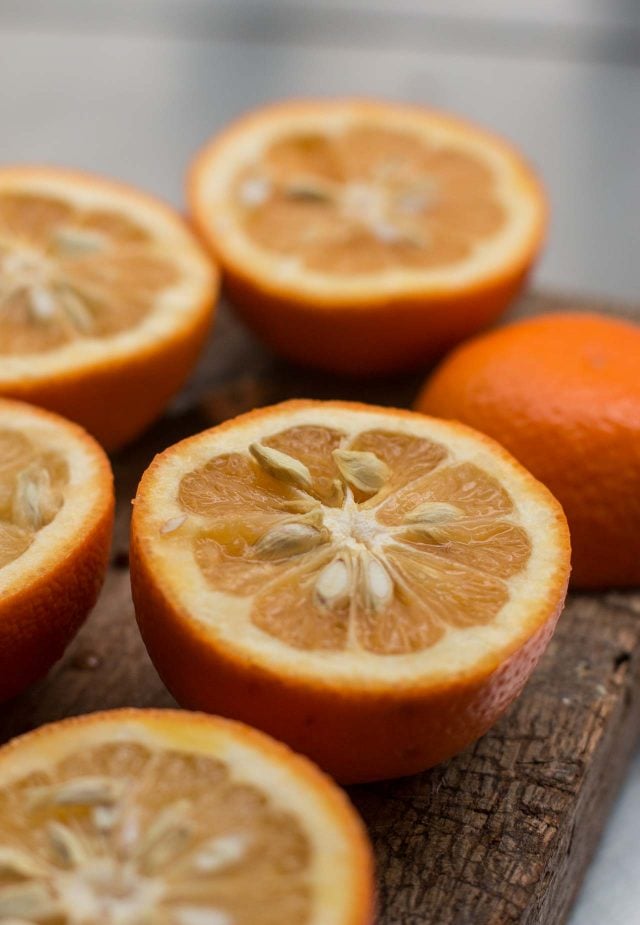
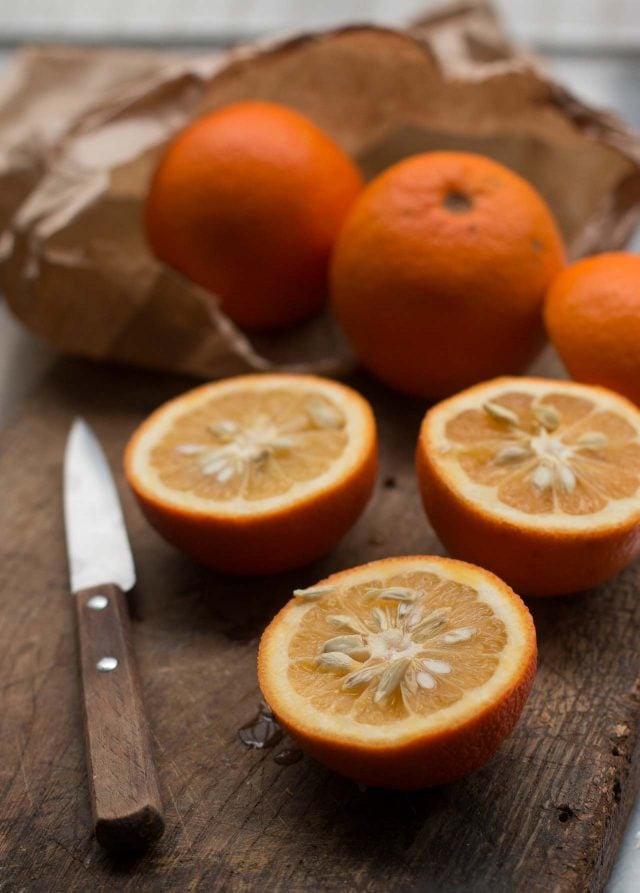
Since Seville oranges are full of seeds, it makes cutting them difficult because you have to keep moving the seeds with your smooth fingers while trying to cut the orange, then find more and fish them deeper inside, pull them out, etc… Each Seville orange has maybe twenty or thirty in it.
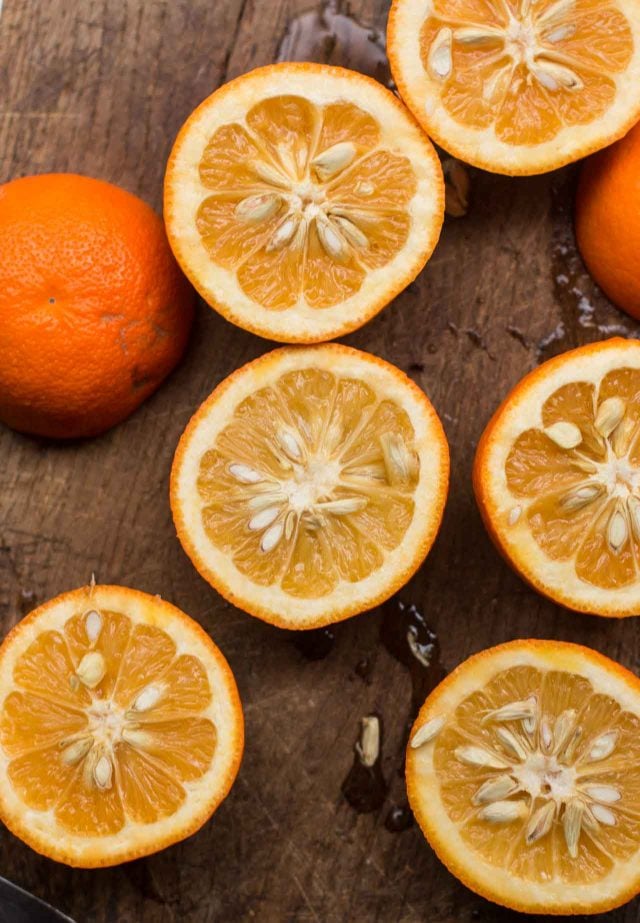
So I thought, what if I squeeze out the juice and seeds first, strain it, and then pour the juice back? These seeds are a prized commodity in jam making and are preserved and used due to their high pectin content.
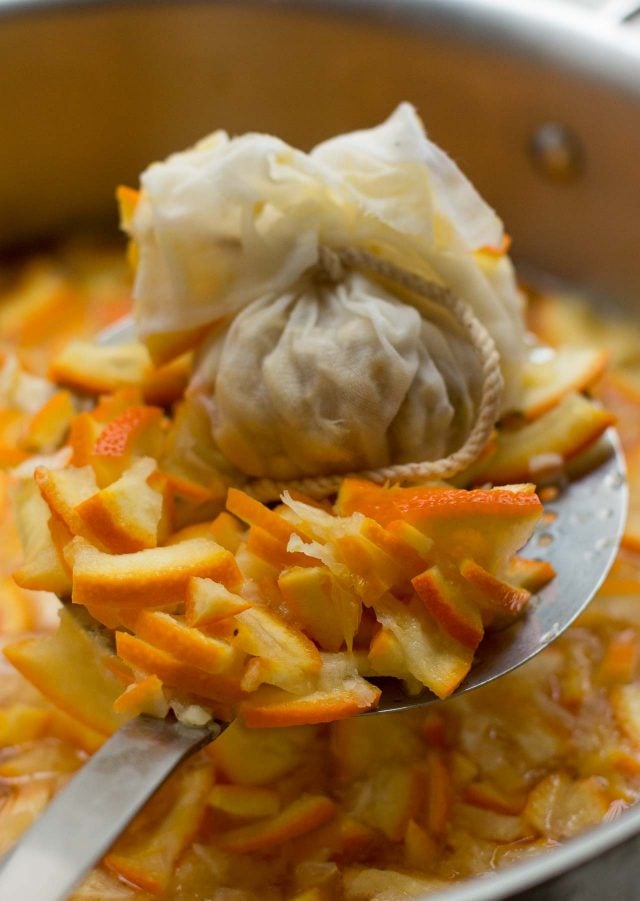
They are wrapped in a sack and cooked with the jam, which gives the jam a soft jelly texture. This simple method, featured in my book Preparing Desserts, makes the whole process much easier.
You may be interested to know Seville Orange Marmalade Created due to error. Apparently, an English woman in 1700, the wife of a grocer, got stuck with some limes, bought cheaply on a ship from Seville.
Because there was a storm and they wanted to get rid of the stock or oranges as quickly as possible, so the grocery store bought them. But they were too sour, so his wife decided to try making jam from them, and Viola!…invented Seville orange marmalade.
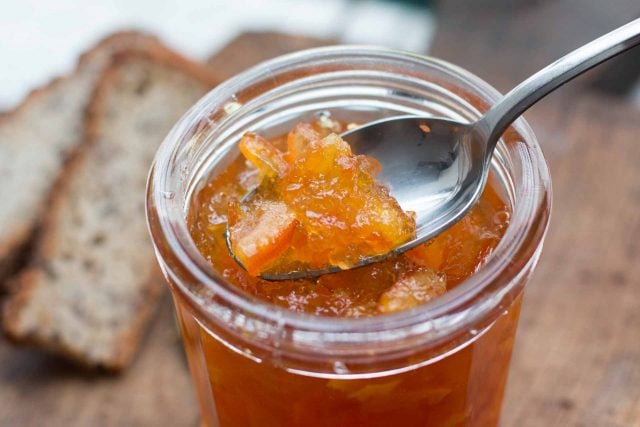

Seville Orange Marmalade
In my book, I recommend leaving the cooked oranges and seeds overnight. This is an optional step. If you want to finish making the jam the same day you start it, that’s okay too.
raw material
- 6 seville oranges (see note)
- 1 navel orange
- 10 Cup(2.5L) water
- pinch salty
- 8 cup (1.6 kg) sugar
- 1 spoon scotch whiskey (Elective)
instruct
-
Wash and dry the oranges. Cut each Seville orange in half crosswise around the equator. Place a non-reactive mesh strainer over a bowl and squeeze the orange halves to remove the seeds, using your fingers to help remove any stubborn seeds lodged deep inside.
-
Tie the seeds very securely with cheesecloth or muslin.
-
Cut each peel into 3 pieces, then use a sharp chef’s knife to cut the peel into slices or cubes as thinly as possible. Each piece should not be too large (no more than a centimeter or 1/3 inch in length). Cut navel oranges into similar sized pieces.
-
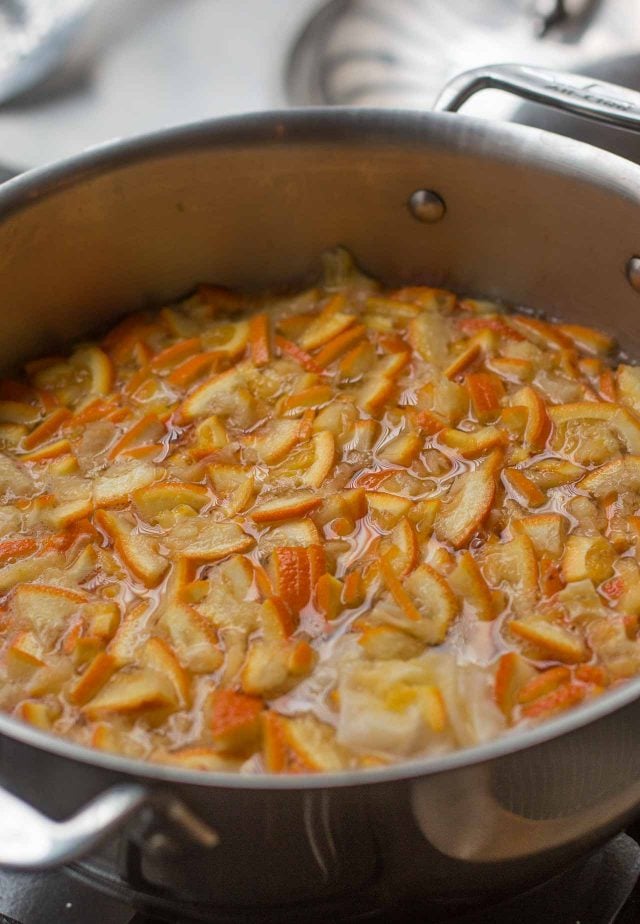
In a large (10-12 quart/L) stockpot, add the orange slices, seed bag, water, and salt, along with the Seville orange juice from step 1. Bring to a boil, then reduce heat and simmer until the peel is translucent, about 20 to 30 minutes. (At this point, I sometimes remove it from the heat after cooking and let the mixture sit overnight to help the seeds release any extra pectin. But it’s not necessary.)
-
Add the sugar to the mixture, bring the mixture to a full boil again, then reduce the heat to a simmer. Stir occasionally while cooking to make sure the bottom doesn’t burn. During cooking, remove seed packets and discard.
-
Continue cooking until gel point is reached, about 218°F (103°C) if using a candy thermometer. I cook the marmalade slightly less than other jams and marmalades because the large amount of pectin helps the marmalade set harder. To test jam, turn off the heat, place a small amount of jam on a plate that has been chilled in the refrigerator, and return it briefly to the refrigerator. Check it after a few minutes; it should be slightly gelatinous and wrinkle slightly when you run your finger over it. If not, keep cooking until it’s nice.
-
Remove from the heat and add the Scotch (if using) and ladle the mixture into a clean jar. Sometimes I bury a vanilla bean in each jar. (This is a great way to recycle previously used or dried vanilla beans.)