When summer tomatoes are at their peak, there’s no better way to showcase them than this elegant French Tomato Tart. With a buttery, flaky homemade crust, a thin layer of Dijon mustard, ripe tomato slices, fresh herbs, and creamy goat cheese, this savory tart is the epitome of simple French cooking. Unlike quiches or custard-based tarts, this recipe lets the tomatoes shine—their sweet, juicy flavor concentrated by the heat of the oven. The tangy mustard provides a spicy back-bite, while the goat cheese becomes golden and crispy on top, warm and creamy inside. A drizzle of honey (wild blackberry honey is spectacular) adds an unexpected sweet-savory note that makes this tart unforgettable. Serve it warm from the oven or at room temperature with a crisp green salad and a glass of rosé. For more French-inspired recipes, try our Homemade Crème Fraîche or this Classic Ratatouille.
Table of Contents
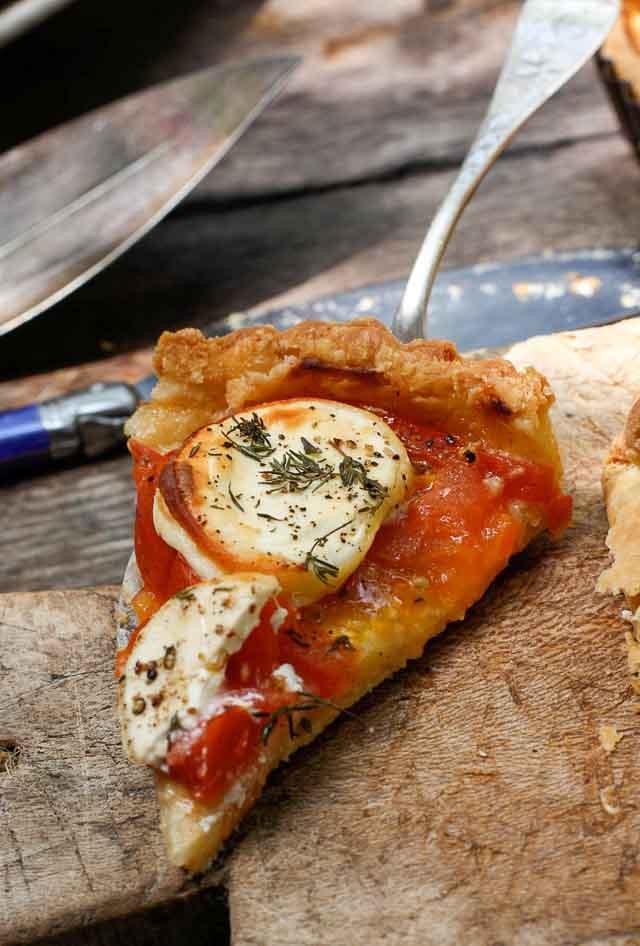
This week I saw the first promise of tomato season. A few brightly colored cherry tomatoes were brought home from the local market, along with more standard varieties. In France, tarts aren’t considered “special occasion” fare—even the most inept home cook will surprise you with a stunning tarte salée that looks every bit as good as anything from the local bakery. This French Tomato Tart is the perfect example: simple enough for a weeknight dinner yet elegant enough for entertaining.
Why This French Tomato Tart Works
Unlike other savory tarts that rely on custard or cream, this French Tomato Tart has no rich filling to mask the tomatoes. The flavor and texture of the tomatoes shine through completely. Fresh goat cheese is fantastic—especially when it gets all crusty brown on top while staying warm and creamy inside. The layer of Dijon mustard spread over the tart provides a spicy back-bite that perfectly complements the sweet baked tomatoes. And the optional honey drizzle? Pure genius. For more summer produce recipes, check out our Fresh Peach Burrata Salad or this Strawberry Salad with Chicken.
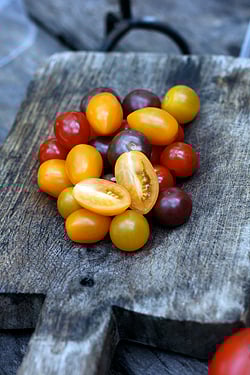

Ingredients for French Tomato Tart
This French Tomato Tart comes together with simple, high-quality ingredients. Here’s what you’ll need:
For the Tart Dough (Pâte Brisée):
- 1½ cups (210g) all-purpose flour
- 4½ ounces (125g) unsalted butter, chilled and cut into cubes
- ½ teaspoon salt
- 1 large egg
- 2-3 tablespoons ice-cold water
For the Filling:
- 1 unbaked tart dough (recipe above)
- Dijon mustard or whole-grain mustard
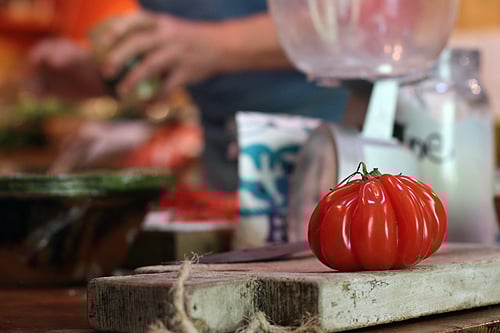
- 2-3 large ripe tomatoes (heirloom or beefsteak work beautifully)
- 2 tablespoons olive oil
- Salt and freshly ground black pepper
- 2 generous tablespoons chopped fresh herbs (thyme, chives, chervil, oregano, or tarragon)
- 8 ounces (250g) fresh or slightly aged goat cheese, cut into rounds
- 1½ tablespoons honey (optional—wild blackberry honey is spectacular)
For another savory tart recipe, try our French Tomato Tart or this Vegetable Ricotta Tart.
How to Make the Tart Dough
This French Tomato Tart starts with a simple, buttery pâte brisée. While you can buy pre-made dough, homemade is surprisingly easy and so much better.
- In a bowl, mix the flour and salt. Add the chilled butter cubes and use your hands or a pastry blender to break the butter into the flour until the mixture has a crumbly texture, like cornmeal.
- In a small bowl, mix the egg with 2 tablespoons of ice water. Make a well in the center of the dry ingredients and add the beaten egg mixture. Mix until the dough holds together. If it doesn’t come together easily, add the additional tablespoon of ice water.
- Gather the dough into a ball. On a lightly floured surface, roll the dough out to about 12-14 inches in diameter, adding flour only as needed to prevent sticking.
- For a traditional tart: Roll the dough around your rolling pin, then unroll it onto a 10-12 inch tart pan with a removable bottom. Gently press the dough into the corners. Run a rolling pin over the top to trim the edges. “Dock” the bottom of the dough by pressing it with your fingers several times to create small indentations.
- For a free-form tart (galette): Roll the dough to about 14 inches across, then transfer to a baking sheet lined with parchment paper. No need to dock the dough.
For more homemade dough recipes, try our Palmiers Recipe (Elephant Ears) or this Shortbread Recipe.
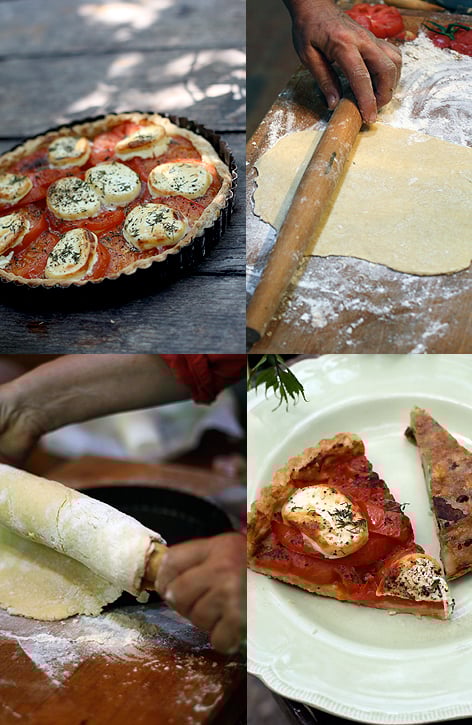
How to Assemble and Bake the French Tomato Tart
Once your dough is ready, assembling this French Tomato Tart takes just minutes. Here’s how:
- Preheat your oven to 425°F (218°C).
- Spread an even layer of Dijon mustard on the bottom of the tart shell. Let it sit for a few minutes to dry slightly.
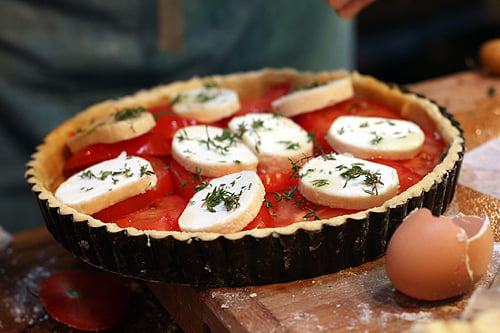
- Slice the tomatoes into ¼-inch thick rounds. Arrange them on top of the mustard in a single, slightly overlapping layer.
- Drizzle the olive oil over the tomatoes. Season with salt and freshly ground black pepper.
- Sprinkle with half of the chopped fresh herbs.
- Arrange the goat cheese rounds on top of the tomatoes. Sprinkle with the remaining herbs.
- If using honey, drizzle it over the top of the tart.
- For a free-form tart: Gently fold the edges of the dough up and over the filling, pleating as you go.
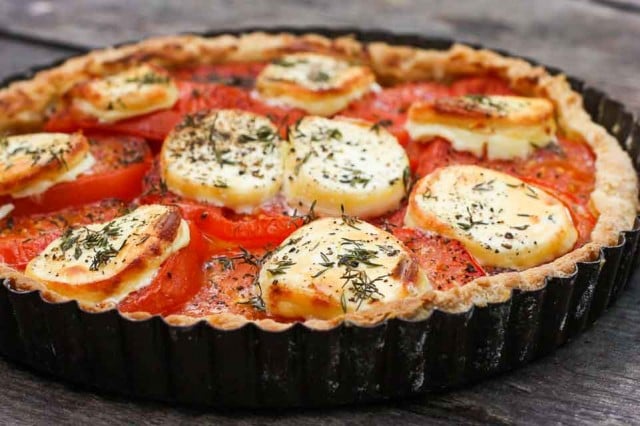
- Bake for 30 minutes, until the pastry is golden brown and cooked through, the tomatoes are soft, and the cheese is browned on top. If the cheese isn’t browned to your liking, you can run the tart under the broiler for 1-2 minutes—watch carefully!
- Let the tart cool for 5-10 minutes before slicing. Serve warm or at room temperature.

Expert Tips for Perfect French Tomato Tart
Follow these tips to make your French Tomato Tart truly exceptional:
- Use ripe but not overripe tomatoes. Firm, ripe tomatoes hold their shape during baking. If your tomatoes are very juicy, you can gently press out some seeds and excess liquid before arranging them on the tart.
- Don’t skip the mustard layer. The Dijon mustard adds a crucial spicy back-bite that balances the sweetness of the tomatoes and honey. Go as easy or as generous as you like—a layer as thick as what you’d spread on a sandwich is just about right.
- Watch the oven temperature. Kate cooks her tart in a very hot oven. Check the tart halfway through baking—if the top is getting too dark before the crust and tomatoes look cooked, reduce the temperature slightly.
- Let the mustard dry. After spreading the mustard on the dough, let it sit for 5-10 minutes to dry slightly. This prevents the mustard from making the crust soggy.
- Use fresh goat cheese. Fresh, soft goat cheese (chèvre) melts beautifully and develops a crispy, golden top. Slightly aged goat cheese also works well.
For more French cooking tips, check out our Homemade Crème Fraîche or this Serranito Sandwich Recipe.
Delicious Variations for French Tomato Tart
This French Tomato Tart is wonderfully versatile. Here are some delicious ways to change it up:
- Cheese substitutions: If you don’t have goat cheese, try Comté, Fontina, Halloumi, or any other melting cheese. Fresh mozzarella also works beautifully.
- Herb combinations: Fresh oregano (sometimes elusive in Paris but worth finding!), thyme, chives, chervil, tarragon, or basil all work wonderfully. Use what you have.
- Add caramelized onions: Spread a layer of caramelized onions under the tomatoes for extra sweetness and depth.
- Add roasted garlic: Dot the tart with roasted garlic cloves before adding the tomatoes.
- Make it vegan: Omit the goat cheese and use a dairy-free cheese alternative or simply enjoy the tart with just tomatoes, mustard, and herbs.
- Add olives: Scatter a few pitted Kalamata or Niçoise olives over the tomatoes before baking.
For more savory tart ideas, try our Vegetable Ricotta Tart or this French Onion Tart.
Storage & Serving Suggestions
This French Tomato Tart is perfect hot from the oven, but it’s also delicious at room temperature—making it ideal for picnics, buffets, and packed lunches.
Refrigerator: Store leftover tart in an airtight container in the refrigerator for up to 3 days. The crust will soften slightly, but the flavors will still be delicious.
Reheating: Reheat slices in a 350°F oven for 5-10 minutes to crisp up the crust. The microwave is not recommended as it will make the crust soggy.
Serving suggestions: This French Tomato Tart pairs beautifully with a simple green salad dressed with lemon vinaigrette. For a heartier meal, serve it alongside BLT sandwiches or a bowl of soup. And in true French fashion, enjoy it with glasses of chilled rosé over ice.
For more make-ahead meals, check out our Top 25 Meal Prep Recipes or this Quinoa Salad.
Frequently Asked Questions
Yes! While homemade dough is wonderful, a good quality store-bought pâte brisée or pie crust works perfectly. In France, many home cooks use pre-made dough from the supermarket refrigerator case—no shame in that game!
To prevent a soggy bottom, make sure your tomatoes aren’t overly juicy (you can gently press out some seeds and liquid). Also, letting the mustard layer dry for 5-10 minutes before adding the tomatoes creates a barrier. Baking on a preheated baking sheet can also help crisp the bottom.
Absolutely! You can assemble the tart (without baking) up to 4 hours in advance and keep it in the refrigerator. You can also bake the tart completely and reheat it gently before serving—it’s also delicious at room temperature.
Fresh goat cheese (chèvre) is traditional and fantastic. Other great options include Comté, Fontina, Halloumi, fresh mozzarella, or a mix of Parmesan and Gruyère.
Yes! Halve or quarter cherry tomatoes and arrange them cut-side up. Cherry tomatoes are actually less watery than large tomatoes, so they work beautifully in this tart.
The honey is optional but highly recommended. It adds a beautiful sweet-savory dimension that complements the tangy mustard and creamy goat cheese. Wild blackberry honey is spectacular, but any good quality honey will work.
This French Tomato Tart is summer on a plate—simple, elegant, and bursting with flavor. For more trusted French recipes, visit BBC Good Food’s tomato tart guide. Leave a comment below and let me know how your tart turned out!
More French-Inspired Recipes You’ll Love
Classic Ratatouille | French Tomato Tart | Serranito Sandwich | Homemade Crème Fraîche | Coq Au Vin