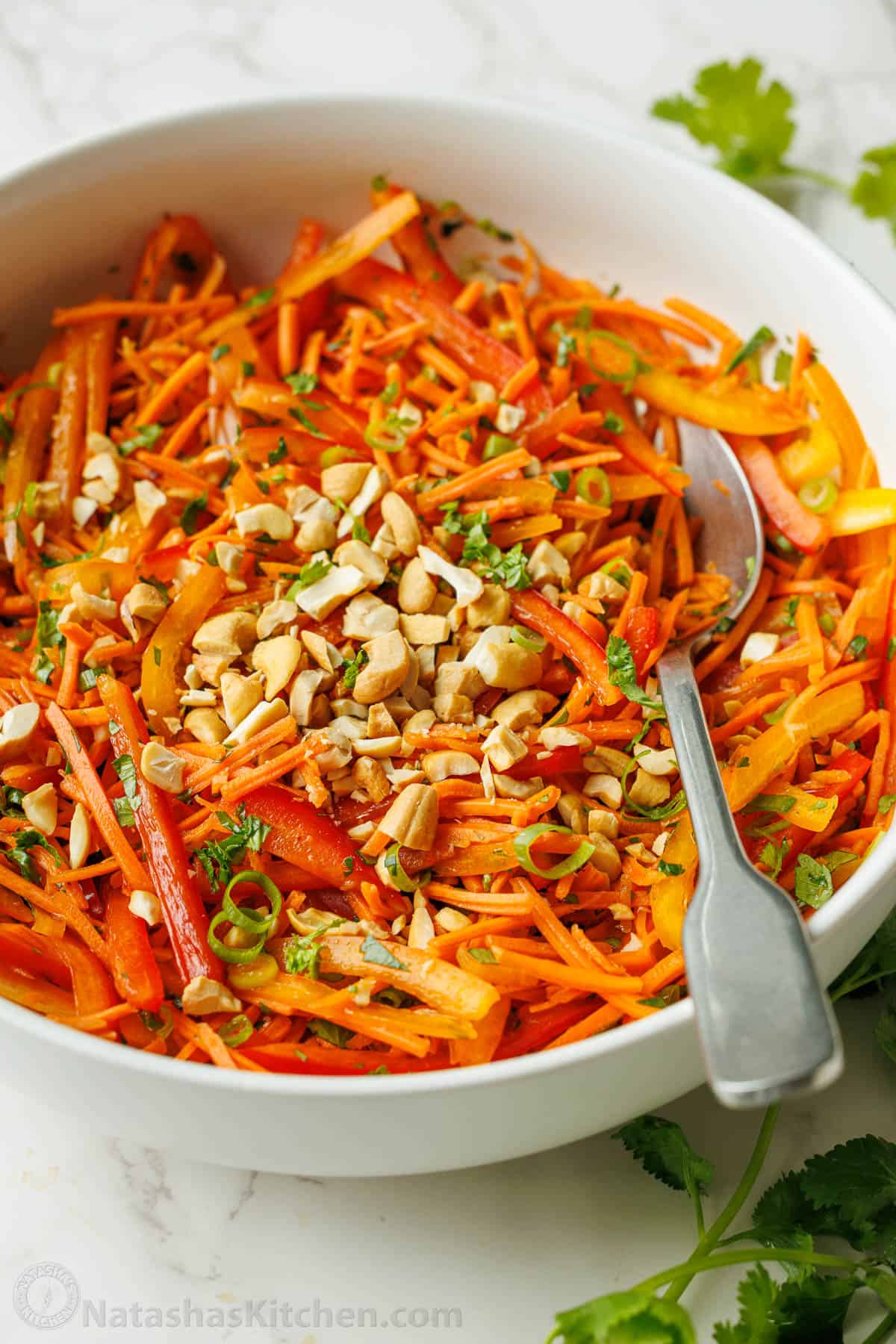
This Spicy Korean carrot salad recipe delivers exciting, bold flavors in minutes! It’s an easy side dish packed with fresh, crunchy, sweet, sour, and spicy notes—all balanced perfectly by a vibrant sesame vinaigrette that truly steals the show.
This post may contain affiliate links. Read my disclosure policy.
Spicy Korean carrot salad video
Carrots are a versatile workhorse ingredient—think carrot cake, carrot soup, and classic mirepoix—but they’re often underrated. Not in this Spicy Korean carrot salad, where their natural crunch, sweetness, and adaptability truly shine!
Table of Contents
- Why You’ll Love This Recipe
- Key Ingredients
- Step-by-Step Instructions
- Tips & Variations
- Serving Suggestions
- FAQs
Why You’ll Love This Spicy Korean carrot salad
My brother-in-law, Slavik, introduced me to this Spicy Korean carrot salad at a family gathering, and it instantly reminded me of the vibrant Som Tam salad from my favorite Thai restaurant. Guests were amazed by the bold, layered flavors—how can simple carrots taste this incredible?
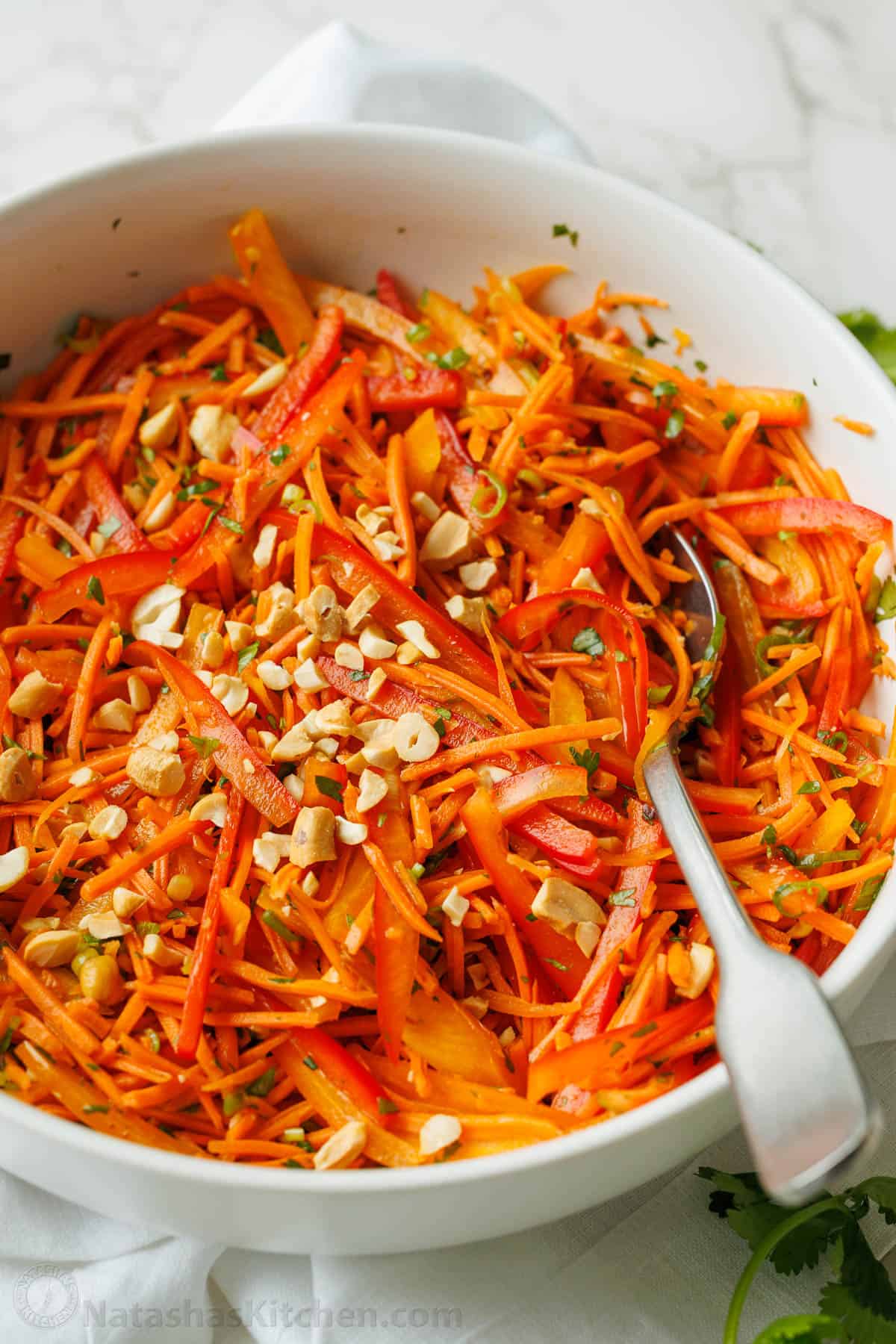
It’s not just the carrots. Fresh bell peppers, scallions, cilantro, toasted cashews, and a quick sesame vinaigrette come together for a dish that’s greater than the sum of its parts. The result? A refreshing, addictive side that complements nearly any meal. For more vibrant vegetable sides, try this no-mayo coleslaw recipe that’s equally fresh and crowd-pleasing.
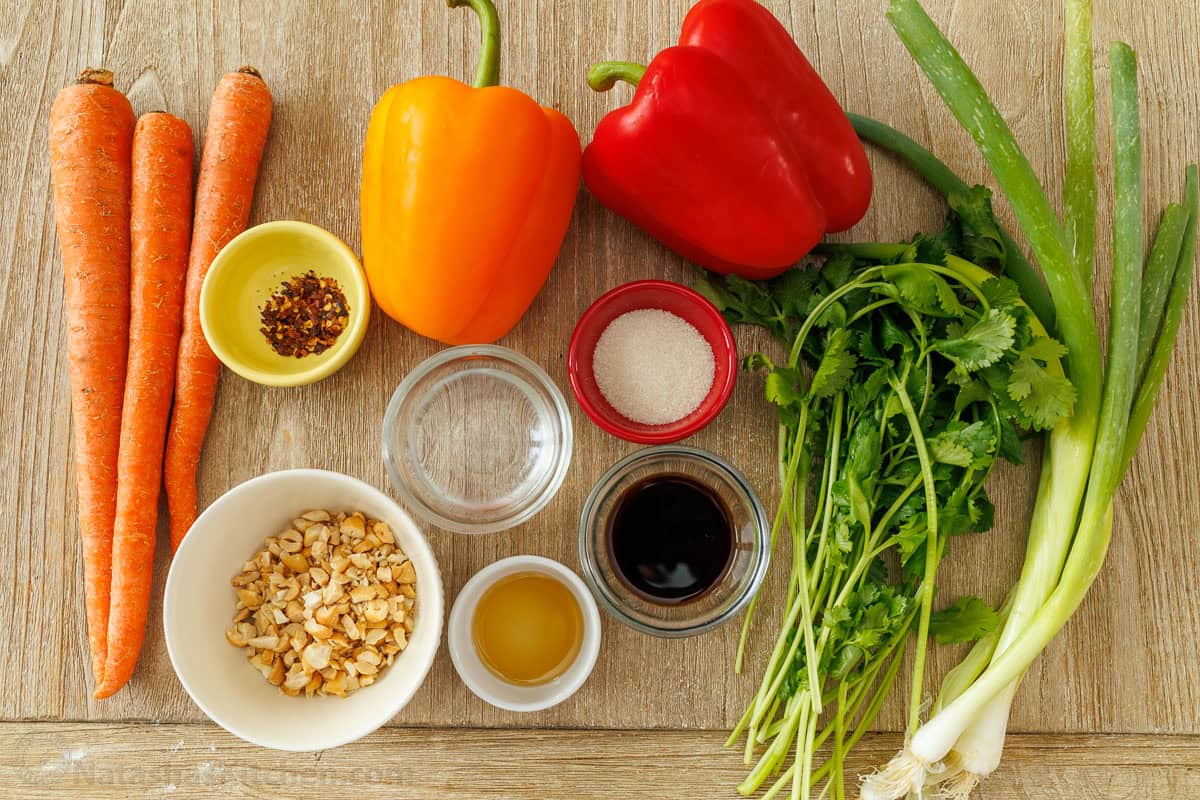
Key Ingredients for Spicy Korean carrot salad
The bold flavors in this Spicy Korean carrot salad come from simple, accessible ingredients:
- Carrots – Wash, peel, and julienne into matchsticks (see video) or use pre-shredded carrots for convenience
- Bell peppers – Red, orange, or yellow (avoid green for best color). Seed and slice thinly
- Green onions – Chop the whole stalk, reserving dark green tops for garnish
- Fresh cilantro – Wash, dry, and finely chop leaves (substitute parsley if preferred)
- Sesame vinaigrette – White vinegar (or apple cider), sugar, low-sodium soy sauce (or Tamari for gluten-free), toasted sesame oil, and crushed red pepper flakes (adjust to taste)
- Cashews – Optional garnish, lightly toasted for extra crunch and flavor
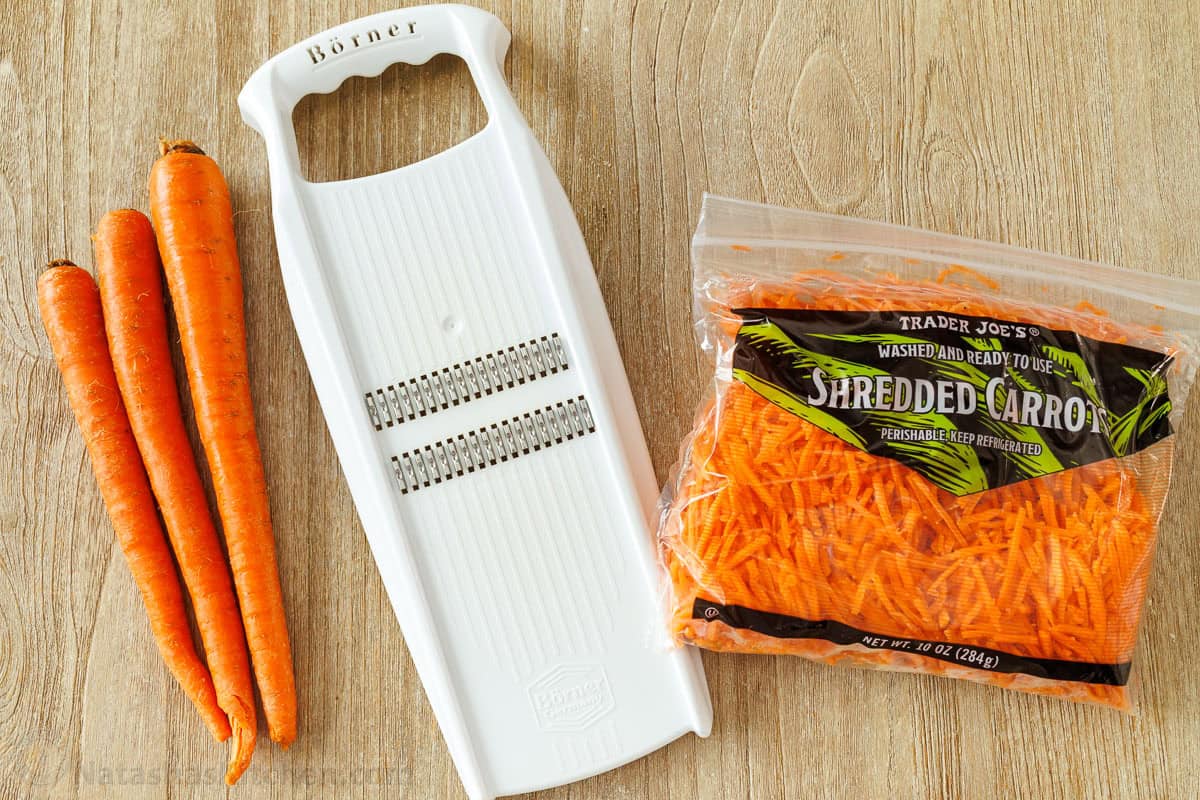
Pro Tip: Perfect Carrot Julienne
For uniform, restaurant-quality matchsticks, use a julienne slicer or mandoline (with a safety glove!). If using pre-shredded carrots, note they’re drier than fresh—adjust dressing quantity accordingly to maintain that signature glossy finish.
How to Make Spicy Korean carrot salad: Step-by-Step
This Spicy Korean carrot salad comes together in just 15 minutes of prep, plus a 20-minute rest for flavors to meld. Perfect for last-minute entertaining!
- Toast the cashews – In a dry skillet over medium heat, toast cashews until golden and fragrant (2-3 minutes). Cool, then roughly chop for garnish.
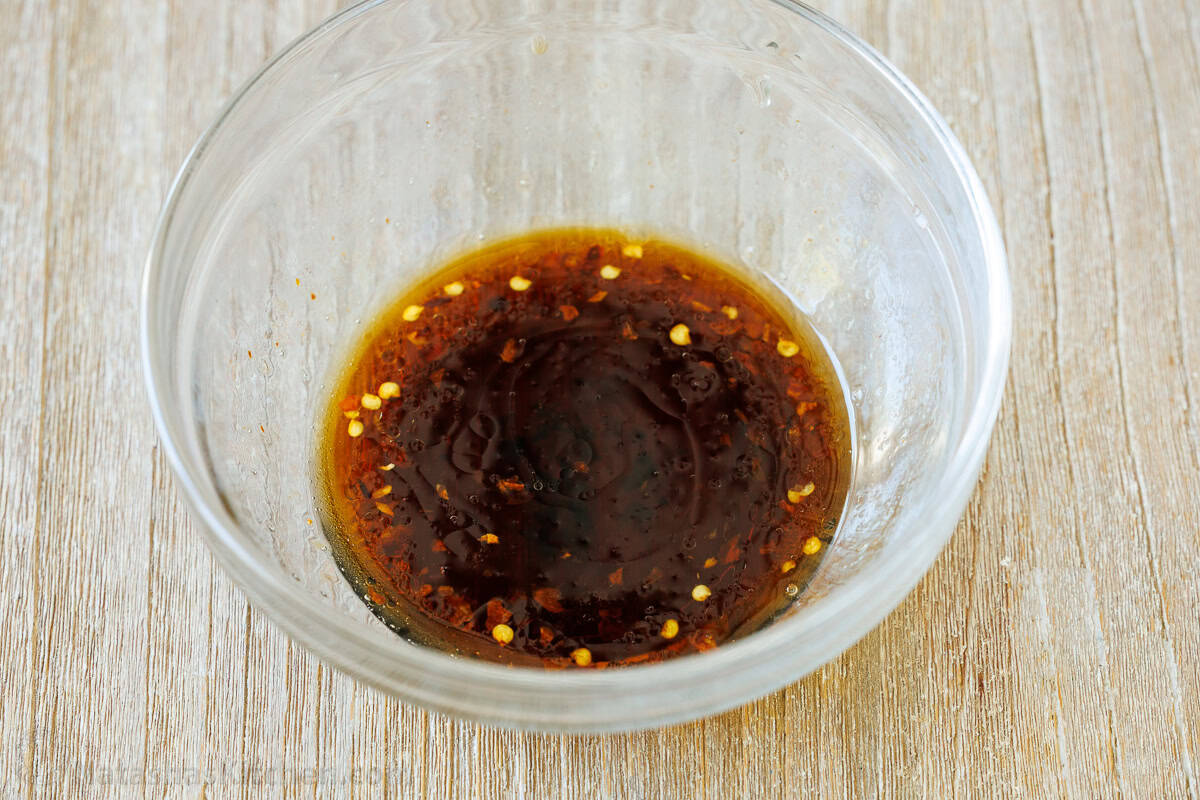
- Whisk the sesame vinaigrette – In a small bowl, combine vinegar, sugar, soy sauce, sesame oil, and red pepper flakes. Stir until sugar dissolves completely.
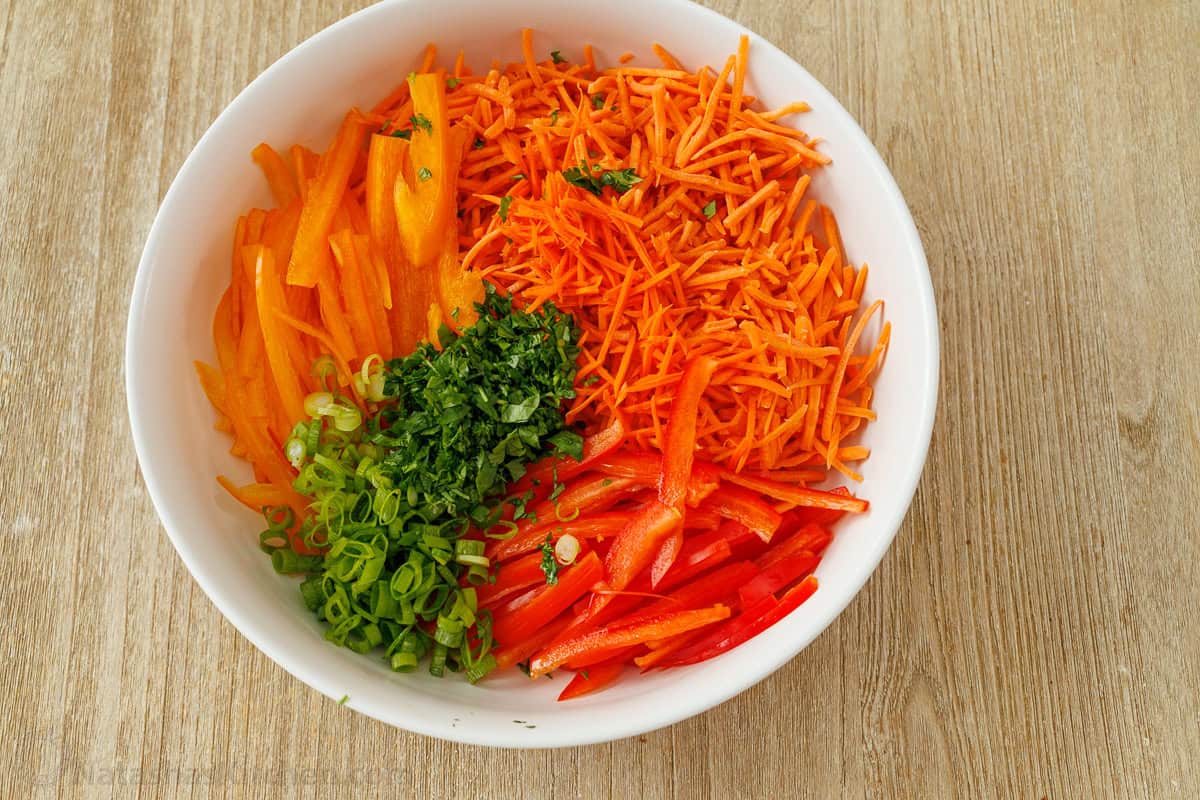
- Combine vegetables – In a large mixing bowl, add julienned carrots, sliced peppers, chopped green onions, and cilantro. Toss gently to distribute evenly.
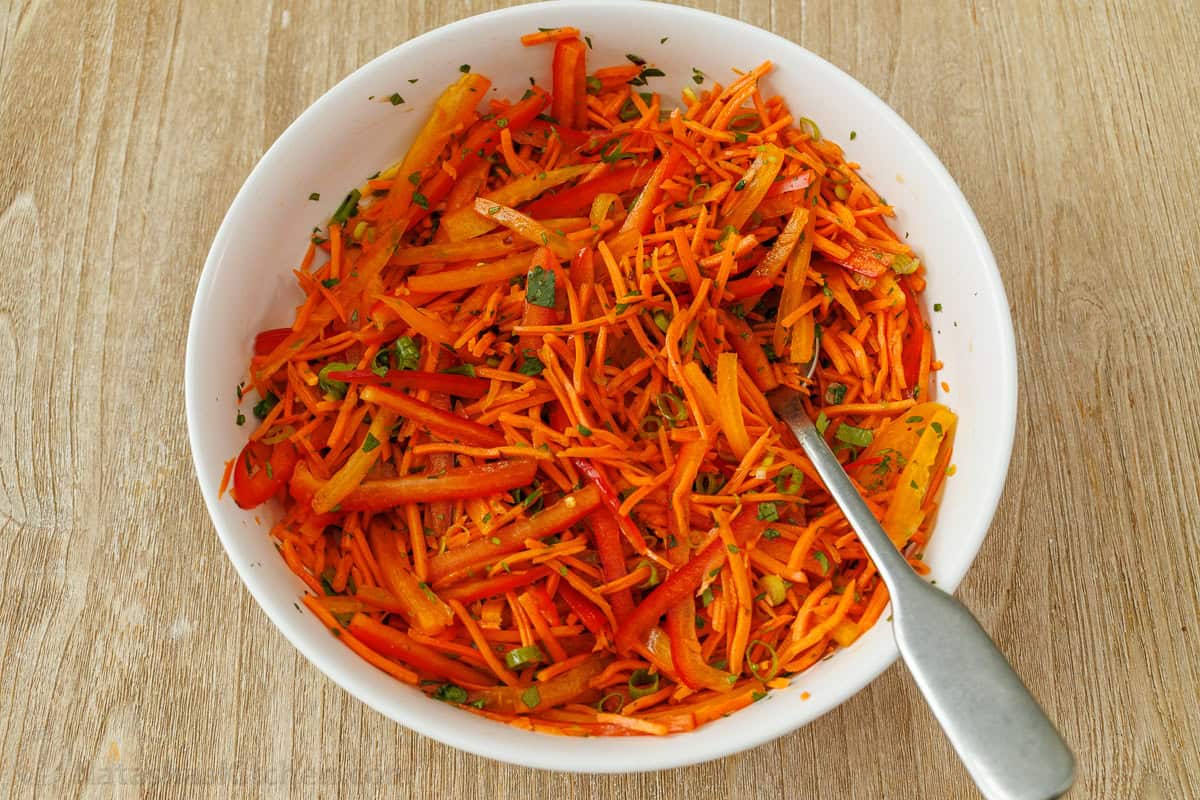
- Dress and marinate – Pour the sesame vinaigrette over the vegetables. Toss thoroughly to coat. Cover and refrigerate for at least 20 minutes (or up to 2 days) to allow flavors to deepen.
- Finish and serve – Just before serving, give the Spicy Korean carrot salad a final toss. Taste and adjust seasoning if needed. Garnish with toasted cashews for crunch.
Flavor Balance Tip
Always taste your Spicy Korean carrot salad before serving! If it needs more brightness, add a splash of vinegar. For extra heat, sprinkle in additional red pepper flakes. Customization is key to perfection.
Tips & Variations for Your Spicy Korean carrot salad
Make this recipe your own with these easy tweaks:
- Protein boost: Add grilled chicken, shrimp, or crispy tofu to transform this side into a light main course
- Vegetable swaps: Try julienned daikon radish, cucumber ribbons, or shredded cabbage for extra crunch
- Herb alternatives: Not a cilantro fan? Fresh mint, basil, or parsley work beautifully
- Nut-free option: Substitute toasted sunflower seeds or pumpkin seeds for cashews
- Make-ahead friendly: Prepare components separately and assemble up to 2 days ahead for effortless entertaining
For more meal-prep inspiration, explore this vegetarian ramen with tofu that pairs wonderfully with crisp vegetable sides.
Serving Suggestions for Spicy Korean carrot salad
This vibrant Spicy Korean carrot salad elevates any meal. Serve it alongside:
- Grilled meats: Korean BBQ, teriyaki chicken, or garlic butter steak
- Asian mains: Fried rice, lo mein, or bibimbap bowls
- Light lunches: Pair with a soft-boiled egg and crusty bread for a balanced meal
- Potlucks: Transport in a sealed container—it travels beautifully and stays fresh
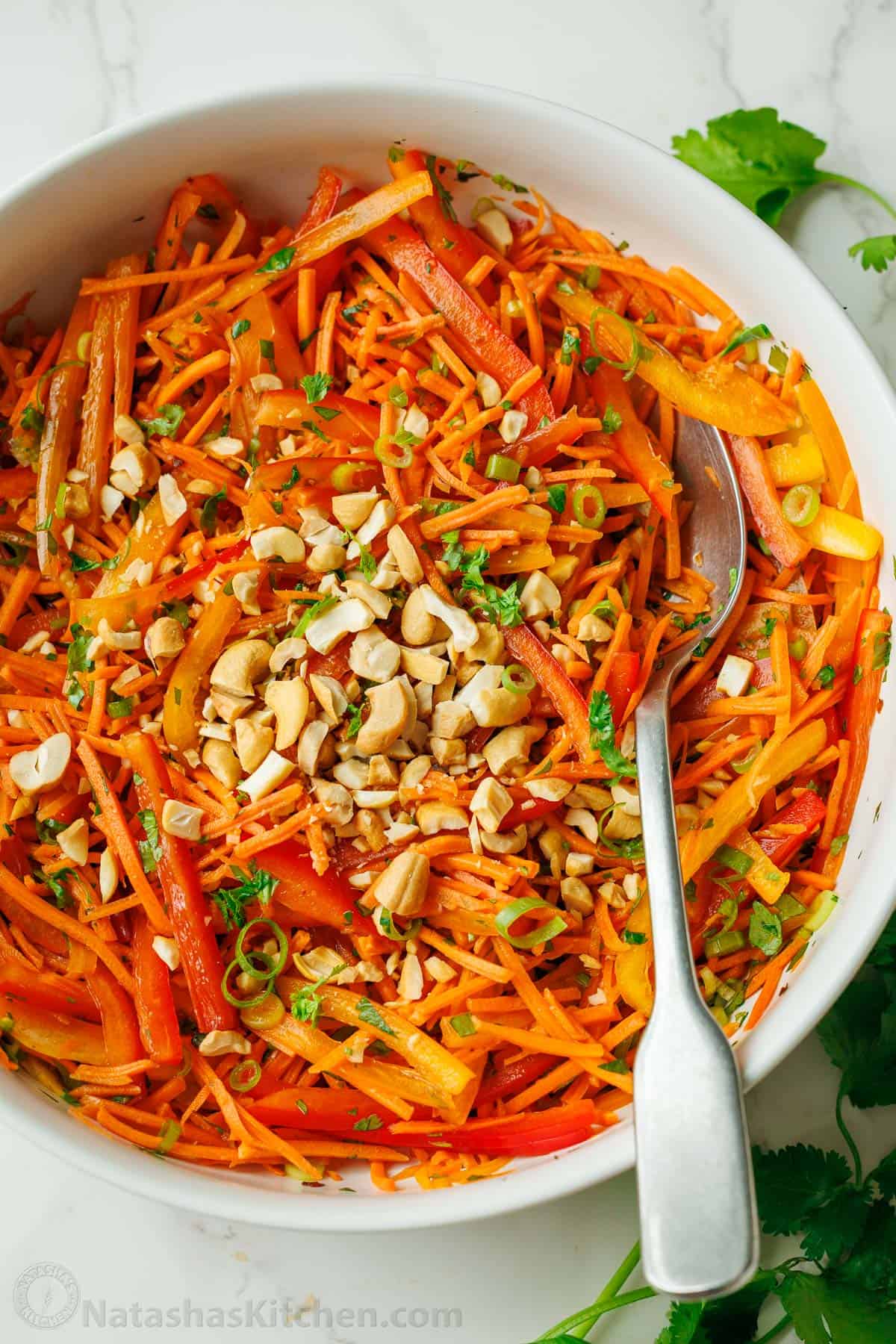
Whether you’re hosting a dinner party or prepping weekday lunches, this Spicy Korean carrot salad delivers restaurant-worthy flavor with minimal effort. No one will ever underestimate the humble carrot again!
Frequently Asked Questions
Can I make this Spicy Korean carrot salad ahead of time?
Yes! Prepare up to 2 days in advance. Store dressed salad in an airtight container in the fridge. The flavors deepen beautifully as it rests.
Is this recipe gluten-free?
Absolutely! Use Tamari instead of soy sauce and verify your vinegar is gluten-free. All other ingredients are naturally gluten-free.
How long does Spicy Korean carrot salad last?
Properly stored in the refrigerator, it stays fresh for up to 4 days. The carrots may soften slightly over time but remain delicious.
Can I reduce the spice level?
Of course! Start with ¼ teaspoon red pepper flakes and adjust to taste. For zero heat, omit them entirely—the sesame vinaigrette still shines.
What’s the best way to julienne carrots without a slicer?
Use a sharp chef’s knife: cut carrots into 2-inch sections, slice into thin planks, then stack and cut into matchsticks. Practice makes perfect!
For more trusted cooking techniques, reference authoritative resources like Food Network’s recipe collection or Allrecipes’ vegetable guides.
Articles you might like
Pingback: Sausage, Apricot And Chestnut Stuffing Recipe Recipes